Why Does It Matter if You Know Hand Laterality Dominance Based on Gender
The Exam of the Relationship betwixt Left-Handedness and Success in Elite Female Archers ()
Recep Gursoy1, Suleyman Sahintwo, Mehmet Dalli3, Kursat Hazar4, Eser Aggon5
1Faculty of Sports Sciences, Mugla Sitki Kocman University, Mugla, Turkey.
2Youth Services and Sports Provincial Directorate, Bursa, Turkey.
3Faculty of Sports Sciences, Mugla Sitki Kocman University, Mugla, Turkey.
4Department of Concrete Education, Mugla Sitki Kocman University, Mugla, Turkey.
5Department of Physical Teaching, Erzincan University, Erzincan, Turkey.
DOI: 10.4236/ape.2017.74030 PDFHTML XML 1,680 Downloads 2,960 Views Citations
Abstract
Objective: This research was carried out in order to make up one's mind the hand and eye authorization (left-hand dominant or right-paw ascendant) of the women participating in Turkish senior women's archery championship and to find out whether in that location were whatever differences amidst the scores gained by the archers as full general total and at the end of their 1 st and 2 nd 50-m target-based shootings when using compound bow. Method: 44 elite-level women archers under the Turkish Federation of Archery participated in the research. Nosotros determined the hand authority and eye dominance of all participants. To decide hand and eye potency, participants completed the Edinburgh Handedness Inventory-Short Form. According to that, 5 of the archers were left-paw ascendant whereas 39 of them were right-hand dominant. A mini survey form was used in order to determine certain bio-motor (age, height, weight and sports age) characteristics of the archers. Results: Laterality might exist one of the most meaning factors for the archers to become successful. Thus , considering that left-hand ascendant archers might gain competitive edge in the archer selection process, these archers can be considered to exist advantageous for being selected. Sportive success can be enhanced if trainers adhere a detail importance to and support these archers and if they consider this situation peculiarly during target-based shooting trainings. Furthermore , taking into consideration that left-hand ascendant persons are more successful that right-hand ascendant persons in certain sports branches, it can exist said that , such persons must not be forced to use their correct hand.
Share and Cite:
Gursoy, R. , Sahin, S. , Dalli, M. , Hazar, K. and Aggon, E. (2017) The Examination of the Relationship between Left-Handedness and Success in Elite Female Archers. Advances in Concrete Education, 7, 367-376. doi: x.4236/ape.2017.74030.
1. Introduction
Handedness is the tendency of humans to use, in various movements or motor tasks, one manus rather than the other (Lanzoni et al., 2013) . The topic of handedness has received a lot of attention in several enquiry fields. It is well known that left-handers are a minority of the general population: their proportion is unremarkably reported to range, with some cultural variations, between 10% and 13% (Raymond et al., 1996; Shorer et al., 2012) . Interestingly, the proportion of left-handed individuals seems not to have changed since the Paleolithic historic period (Faurie & Raymond, 2005) , although handedness has both a genetic and environmental origin (Steele & Umini, 2005) , and left-handedness is associated to fitness costs and functional disadvantages (Geschwin & Behan, 1982; Donaldson & Johnson, 2006) . Therefore, it can be supposed that left-handers take likewise some advantages when compared to right-handers. For example, a option mechanism linked to fighting interactions has been suggested (Raymond et al., 1996) . About ninety percent of all humans are correct-handed, the left-brain dominates for motor skills considering the vast majority of people are right-handed, (Coon & Mitterer, 2011) . Right hands oft show functioning differences that have been attributed to hemispheric specialization. The correct hemisphere is superior at imagery and visual abilities, therefore lefties are meliorate at visualization In full general, left-handers are more than symmetrical on about everything including center dominance, fingerprints, (Coon & Mitterer, 2009) . A number of studies take investigated handedness differences and suggested that left-handed players have probably an intrinsic neurological advantage (Eckner et al., 2010) . Loffing et al. (2010) reported left-handers were plant with disproportionately more frequency in interactive sports such as lawn tennis, fencing. Left-handers' performance advantage persists in amateur tennis. In general, the advantage of left-handers in fights may exist reflected in a sport context, especially in gainsay sports (eastward.g., battle, judo and karate), interactive team sports (due east.chiliad., rugby and handball), and racket sports (e.g., table lawn tennis and badminton) (Raymond et al., 1996) . Some authors hypothesized a neuropsychological advantage of left-handed sportsmen (Annett, 1985; Nass & Gazzaniga, 1987) . Still, (Wood & Aggleton, 1989) observing in fast ball sports a proportion of left-handed players higher than in the full general population, concluded that the reward of left-handers was due to specific characteristics of the sports disciplines rather than to neuropsychological factors. Additionally, it has been reported that there is a loftier proportion of left-handedness among top athletes in baseball (Fisekcioglu, 2011) , in tennis (Holtzen, 2000) , in fencing (Bisiacchi et al., 1985) , in cricket (Wood & Aggleton, 1989) . Therefore, it can be expected some relationships betwixt hand pereference and succes in archery. The research carried out inside the framework of the above-mentioned information has three objectives. The start of these is to determine hand and middle dominance of the women archers participating in Turkish archery championship; the 2nd is to find out whether the scores gained as general total and at the end of beginning and second fifty-chiliad target-based shootings of the archers have influence on success in sports; and third, to help the trainers and beginner archers in parallel with the higher up-given data about the hand and centre dominance when selecting the archers.
2. Fabric and Method
This research was carried out to analyze the left-hand dominant and right-paw dominant women archers under the Turkish Federation of Archery, who participated in the Turkish senior women'southward archery title in lodge to find out whether there were any differences among the scores gained by the archers as general total and at the stop of their onest and 2nd fifty-m target-based shootings when using chemical compound bow, with respect to their hand dominance. 44 elite-level women archers under the Turkish Federation of Archery participated in the research.
To determine the mitt preference of the archers Oldfield (1971) (Edinburg Handedness Inventory) survey form was used. ten questions were included in the survey form. These questions aimed to notice out which hand was used for: ane) writing; two) drawing picture; three) throwing a ball or a stone; 4) holding scissors; 5) brushing teeth; 6) holding a knife without forks; 7) holding forks; 8) belongings a shovel; 9) hit a match; and 10) opening the cap of a bottle. The options were; "always the right hand" (+10 points), "more often than not the right hand" (+5 points), "both hands" (0 point), "mostly the left hand" (−v points) and "always the left paw" (−10 points). The total of the to a higher place-given points gives the laterality score. Distribution of the scores was equally the post-obit: Strongly right-hand ascendant persons were scored between +80 and +100 points and the strongly left-hand ascendant persons were scored between −80 and −100 points. 5 of the archers were left-mitt dominant whereas 39 of them were right-hand ascendant. The keyhole test included in the aforementioned test was applied in social club to make up one's mind eye dominance.
two.1. Participants
Forty-four elite level female archers (the historic period average of the archers was 22.84 ± 2.41; acme average was 165.48 ± v.84; weight average was 64.04 ± five.42 and sports historic period boilerplate was 5.34 ± 1.31.) inside the Turkish Archery Federation programme participated to the study.
2.two. Experimental Pattern and Procedures
In shooting analysis, the archers shot 6 arrows for the 1st and 2nd 50-m target-based shootings in a contest according to the official rules of the international federation of archery. They repeated these shootings for ii times and completed their shootings with 6 pointer shootings in serial of 6 for each repetition (2 × 36 = 72 pointer shootings). In the contest, the archers received 10 points for each arrow hit the target and the scoring went every bit nine, 8, 7, 6 and v toward the lower targets and the general full was calculated as 10 × 72 = 720.
ii.3. Statistical Assay
Descriptive statistics was used in the assessment of the scores of the archers for the ii 50-grand target-based shootings and the group variables were determined. Independent sample t test at significance level of 0.05 was used in order to determine the departure between the grouping variable data averages. Correlation analysis at a significance level of 0.05 was used in lodge to make up one's mind the correlation between the variables, the power and direction of the correlation.
3. Results
Tabular array 1 shows that the age boilerplate of the archers was 22.84 ± two.41; height boilerplate was 165.48 sd ± 5.84; weight boilerplate was 64.04 ± 5.42 and sports age average was 5.34 ± 1.31. Scores for the first 50-chiliad shootings of the archers were betwixt 135 and 344; µ = 284.36 ± 50.12. Scores for the second 50-m shootings were between 131 and 155; µ = 289.30 ± 52.72. Their total scores were measured every bit 289 - 695; µ = 574.09 ± 100.06.
As can be understood from the Tabular array 2, average general total scores and the first and second 50-grand shooting scores the left-hand dominant archers achieved in their correct-mitt, target-based shootings using roller arrow were higher compared to those accomplished by the right-hand dominant archers using their right hand. On the other hand, cess of the total scores with respect to the range showed that the ranges of the first and second 50-m shootings standard deviations of the left-hand dominant archers were narrower compared to the correct-mitt dominant archers. In other words; the first and second fifty-g shooting scores of the left-hand dominant archers did non change significantly.
Equally tin be seen in Table 3, five of the archers were left-mitt dominant whereas 39 of them were correct-hand dominant and used their correct hand to shoot the arrow. Left-mitt dominant archers had an average score of 334.eighty sd ± 6.87 in
First (50 m), 2d (50 m) and full scores prove normal distribution (p > 0.05).
their starting time right-manus 50-m shooting whereas right-manus dominant archers had an average score of 227.90 ± 49.60 in their first right-hand fifty-m shooting. Left-hand ascendant archers scored 335.eighty ± 8.76 on average, in their second 50-m shooting whereas the correct-hand dominant archers scored 283.33 ± 53.06 on average. Boilerplate total shooting score was 670.60 ± xiv.12 on average, for the left-hand dominant archers, whereas it was 561.72 ± 99.63 on average, for the correct-hand dominant archers.
Table 3 presents a significant divergence (p < 0.05) between the first 50-yard target-based shootings of left- and correct-mitt dominant archers. Left-hand dominant archers scored (µ = 334.fourscore) more than than the right-hand ascendant archers (µ = 227.90) in their first 50-m shootings. There was a significant difference (p < 0.05) between the average scores of the second 50-yard target-based shootings of left- and right-mitt dominant archers. Left-hand dominant archers scored (µ = 335.80) more than the right-hand dominant archers (µ = 283.33) in their 2nd 50-one thousand shootings. Average total scores of the target-based shootings of the left-mitt dominant archers were significantly higher (p < 0.05) than the correct-hand dominant archers. Left-hand dominant archers (µ = 670.60) had a higher total score compared to right-hand dominant archers (µ = 561.72).
As we can understand from the Table 4, the hateful scores of the dominant left-handed archers from the shots they fabricated by using the bow with left hand and pointer right hand to the target are college than the mean scores of the dominant correct-handed archers fabricated by using the bow with right hand and arrow left hand to the target in the first and second fifty thousand shots and in general total. On the other hand, when the scores achieved in terms of change interval are examined, it is observed that the change intervals of the dominant left-handed archers are narrower in standard deviations of the commencement and second 50 meter shots compared
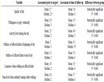
Tabular array 4. Independent samples t-test.
Table 5. The correlation betwixt the archers' success in right-hand target-based shooting and their mitt dominance.
*0.05 significance level; **0.01 significance level.
to right-handed archers. In other words, there was not a very big alter between the scores of the first and 2d 50 meter shots of left-handed archers.
When looking at In Table five, left-hand ascendant archers scored better in the fifty-yard target-based shootings when holding the bow with their right-hand compared to right-hand dominant archers. On the other manus, there was a weak negative correlation (p < 0.05) between the ascendant manus and the success rating. Like results were obtained at the end of the second 50-one thousand shootings. There was a significant positive correlation between the dominant hand and the success rating (p < 0.ane). Left-mitt ascendant archers scored better in target-based shootings compared to correct-mitt dominant archers. This case was true both in the first and the 2nd 50-m shootings. On the other hand, it was more obvious in the second 50-one thousand shootings.
4. Discussion
This inquiry consists of iii stages. The starting time one aims to utilise the OldField (1971) (Edinburgh Handedness Inventory) exam method to make up one's mind the hand and eye dominance in women archers; with the determination of the hand dominance of the women archers participating in the Turkish senior women's championship, the 2d stage aims to detect out whether the first and second 50-m target-based shootings of the women archers have whatever influence on success in sports. The third stage aims to help the trainers, beginner archers and anyone interested in parallel with the available data well-nigh the hand and middle potency when selecting the archers.
Equally already known, the ones with dominant hand also have the abilities to apply hand and foot in a dominant manner and to hear and meet better. Furthermore, every bit they actively use these organs in daily life and in sports activities, they develop much more than the non-ascendant organs. There are recent researches that accept been performed to analyze the correlation betwixt hand dominance and success in sports. Yet, this might crusade unlike reflection of the correlation between middle dominance and success of the archers.
Because the target-based shootings performed with bow and arrow in archery, it can be said that the bow used is mostly developed in favor of the right-hand dominant persons, indeed. Only left-manus ascendant persons have to use them, too. Hence, archers shoot thousands or x thousands of arrows using bows and develop their dominant extremity and sight functions. Still, this might cause problems for beginner archers when they need to meet the target with their non-dominant eye and when they perform target-based shootings. Long-term trainings tin eliminate this problem in fourth dimension. Thus, non-dominant right eye of the left-hand dominant archers tin can ameliorate sight throughout the years with target-based shootings. But this requires scientific studies. On the other manus, long-term trainings can farther improve motor learning and skills with nerve and muscle coordination.
As is known, those who with dominant hand preferences at the same time accept better hearing and vision skills in addition to dominant usage of hand and foot skills and the limbs used more effectively in daily life and sporting activities evidence a greater improvement than non-dominant limbs. There are some recent works equally to relation of hand preference and success in sports. Information technology has been suggested that left-handers have an intrinsic advantage over right-handers due to superior spatio-motor skills and that the relatively loftier proportion of this innate superiority (Annet, 1985; Geshwind & Galburda, 1985) . (Brooks et al., 2004) Also, analyzed the batting records from the 2003 cricket World Cup and showed that left-handed batsman were more succesfull than right-handers and that the most succesfull teams had close to % 50 left-handed batsman. Considering sports like shooting, interaction between manus preference and eye authorisation seems a relevant factor in performance (Shereran, 1985; Jones et al., 1996) .
On the other hand, the rate of left-handedness was higher in wrestlers with medal honors compared to wrestlers without medals for both men and women. the winning numbers and match degrees were higher in the lef-handed wrestler than in both right-and mixed handed wrestlers in international tiptop wrestlers. It has been suggested that left-handed wrestlers are more succesful (Gursoy et al., 2010) . Left-handed boxers were constitute to be more successful than correct-handed (Gursoy, 2009) . Furthermore, study cited by Loffing et al. (2012) found that a left-handers' operation reward persists in amateur tennis. The uncrossed eye-hand pattern is distinctly more than succesful than the crossed middle-hand pattern, given the features of the action, motionless target, and nonexistent time force per unit area. more over, to aim at the target to use the arm corresponding to the sighting eye. This presence of uncrossed patterns in sighting sports was reported past Porac and Coren (1981) , who noted among the elite performances in these sports more uncrossed than crossed patterns. The difference in operation of each pattern tin be explained by the dissimilar way used to transmit visual information. Archery requires more than accurateness than speed, so it requires the intervention of the geniculate-striate arrangement, which is the one used more ofttimes in the uncrossed design, opposite to the retinotectal organisation, which is used principally in situations with target motility and fourth dimension pressure and which is used more often in crossed pattern (Azemar, 2003) . İn archery, the primary quality required is visuomotor coordination, which directly affects functioning (Simon, 1998) . However, this case may lead to different reflections of eye preference and achievement statues in those engaged with archery sports. The laterality used by some practitioners of archery. Some results are from those obtained in other sighting sports similar pistol shooting or marksman sports, where uncrossed pattern was associate with elite practice status (Porac & Coren, 1981) .
When target shooting using bows and arrows archery are evaluated we see that the bow is generally a tool developed for the use of right-handed people. Much as this is the case, it is inevitable for left-handed people to utilize this equipment. Therefore, archers meliorate their dominant extremities and vision functions by shooting thousands of times with the bows and arrows they use over the years. This can exist overcome past long-term preparation works in the post-obit periods. In other words, the non-dominant right eyes of the lefties may gain better eyesight over fourth dimension with the arrows shot to the target. However, scientific works are required on this field. On the other hand, long-term trainings tin improve motor learning and ability in addition to nervus and muscle coordination (Sylvain & Fabrice, 2009) . Also, archery requires repetition of the same gesture many thousands of times, leading to automation. This maybe based on complex cognitive changes in the primal nervous organisation. This process of motor learling may perhaps exist associated with changes in laterality pattern (Peters, 2004) .
5. Decision
In decision, laterality might exist i of the most pregnant factors for the archers to become successful. Thus, considering that left-mitt dominant archers might gain competitive edge in the archer selection procedure, these archers can be considered to exist advantageous for beingness selected. Sportive success can exist enhanced if the families are aware of this feature of their children, if trainers attach a item importance to and support these archers and if they consider this state of affairs specially during target-based shooting trainings. Furthermore, taking into consideration that left-paw ascendant persons are more successful than right-manus dominant persons in sure sports branches, it tin can exist said that such persons must not be forced to utilize their right hand.
Conflicts of Interest
The authors declare no conflicts of interest.
References
| [1] | Annett, M. (1985). Left, Correct, Hand and Brain: The Right Shift Theory. London: Erlbaum. |
| [2] | Azemar, Thousand. (2003). L'Homme Asymetrique: Gauchers et Droitiers Face a Face. [Disproportionate Man: Left and Correct Handed Face up to Face up.] Paris: CNRS. https://doi.org/x.4000/books.editionscnrs.8714 |
| [iii] | Bisiacchi, P. S., Ripoll, H., Stein, J., Simonet, P., & Azemar, Thousand. (1985). Left-Handedness in Fencers: An Attentional Advantage? Perceptual and Motor Skills, 61, 507-513. https://doi.org/10.2466/pms.1985.61.ii.507 |
| [iv] | Brooks, R., Bussiere, L. F., Jennions, One thousand. D., & Hunt, J. (2004). Sinister Strategies Succeed at the Cricket World Loving cup. Proceedings of the Royal Guild of London B: Biological Sciences, 271, 64-66. https://doi.org/10.1098/rsbl.2003.0100 |
| [5] | Coon, D., & Mitterer, J. O. (2011). Psychology: Modules for Active Learning with Concept Modules with Note-Taking and Practise Exams. CA: Wadsworth. |
| [6] | Coon, D., & Mitterer, J. O. (2009). Psychology: Modules for Active Learning (11th ed.) CA: Wadsworth. |
| [seven] | Donaldson, G., & Johnson, G. (2006). The Clinical Relevance of Hand Preference and Laterality. Physical Therapy Reviews, 11, 195-203. https://doi.org/ten.1179/108331906X99074 |
| [eight] | Eckner, J. T., Kutcher, J. S., & Richardson, J. K. (2010). Pilot Evaluation of a Novel Clinical Exam of Reaction Time in National Collegiate Athletic Clan Segmentation Football game Players. Journal of Athletic Training, 45, 327-332. https://doi.org/10.4085/1062-6050-45.4.327 |
| [ix] | Faurie, C., & Raymond, Due north. (2005). Handedness, Homicide, and Negative Frequency-Dependent Pick. Proceedings of the Royal Society of London B: Biological Sciences, 272, 25-28. https://doi.org/10.1098/rspb.2004.2926 |
| [ten] | Fisekcioglu, B. I. (2011). Relations of Mitt Preference, Muscle Power, Lung Function and Reaction Time in Right-Handed Taekwondo Players. World Applied Sciences Periodical, 12, 1288-1290. |
| [11] | Geschwin, North., & Behan, P. (1982). Left-Handedness: Association with Immune Affliction, Migraine, and Developmental Learning Disorder. Proceedings of the National Academy of Sciences, 79, 5097-5100. https://doi.org/x.1073/pnas.79.sixteen.5097 |
| [12] | Geshwind, N., & Galburda, A. G. (1985). Cerebral Lateralization: Biological Machinery, Associations and Pathology: A Hypothesis and a Programme for Research. Archives of Neurology, 42, 428-459. https://doi.org/10.1001/archneur.1985.04060050026008 |
| [13] | Gursoy, R. (2009). Effects of Left- or Correct-Mitt Preference on the Success of Boxers in Turkey. British Periodical of Sports Medicine, 43, 142-144. https://doi.org/x.1136/bjsm.2007.043547 |
| [14] | Holtzen, D. W. (2000). Handedness and Professional person Tennis. International Journal Neuroscience, 105, 101-119. https://doi.org/x.3109/00207450009003270 |
| [15] | Jones, L. F., Classe, J. K., Hester, One thousand., & Harris, K. (1996). Association between Eye Say-so and Training for Rifle Marksmanship: A Pilot Report. Journal of the American Optometric Association, 67, 73-76. |
| [16] | Lanzoni, I. Grand., Semprini, One thousand., Di Michele, R., & Merni, F. (2013). Top Athletes Handedness in the Major Dissonance Sports. In The 13th ITTF Sport Scientific discipline Congress (pp. 160-163). |
| [17] | Loffing, F., Hagemann, N., & Strauss, B. (2010). Automated Processes in Lawn tennis: Practice Left-Handed Players Do good from the Tactical Preferences of Their Opponents? Journal of Sports Sciences, 28, 435-443. |
| [eighteen] | Loffing, F., Hagemann, N., & Strauss, B. (2012). Left-Handedness in Professional person and Amateur Tennis. PLoS One, seven, e49325. https://doi.org/10.1371/journal.pone.0049325 |
| [19] | Nass, R. D., & Gazzaniga, M. S. (1987). Cognitive Lateralization and Specializat Ion in Homo Central Nervous System. In F. Plum (Ed.), Handbook of Physiology (pp. 701-761). Bethesda: The American Physiological Society. |
| [20] | Oldfield, R. C. (1971). The Assesment and Analysis of Handedness: The Edinburg Inventory. Neuropsychologia, 9, 97-113. |
| [21] | Peters, Thousand. (2004). La lateralite manuelle chez les adultes: Dans quelle mesure la main not preferee peut-elle atteindre les capacites de la master preferee? [Hand Laterality in Adults: To what Extent Tin the Unpreferred Hand Attain the Capacities of the Preferred Hand?] Marseille: Solal. |
| [22] | Porac, C., & Coren, S. (1981). Lateral Preferences in Human Behavior. New York, NY: Springer-Verlay. https://doi.org/10.1007/978-1-4613-8139-6 |
| [23] | Raymond, Grand., Pontier, D., Dufour, A. B., & Moller, A. P. (1996). Frequency Dependent Maintenance of Left-Handedness in Humans. Proceedings of the Royal Society of London B: Biological Sciences, 263, 1627-1633. https://doi.org/10.1098/rspb.1996.0238 |
| [24] | Shereran, T. J. (1985). Result of Pure and Crossed Dextrality on Marksmanship Skill. Perceptual and Motor Skills, 61, 1171-1174. https://doi.org/x.2466/pms.1985.61.3f.1171 |
| [25] | Shorer, J., Loffing, F., Hagemann, N., & Baker, J. (2012). Man Handedness in Interactive Situations: Negative Perceptual Frequency Effects Can Be Reversed. Periodical of Sport Sciences, 30, 507-513. https://doi.org/10.1080/02640414.2012.654811 |
| [26] | Simon, F. (1998). Les capacites physiques et motrices specifiques. In Le tir a L'arc-comprendre, pratiquer, enseigner. [Specific Physical and Motor Capacities. In the Shooting a the Arc-Comprise, to Practice, to Teach.] Paris: INSEP. |
| [27] | Steele, J., & Uomini, N. T. (2005). Humans, Tools and Handedness. In V. Roux, & B. Bril (Eds.), Stone Knapping: The Necessary Conditions for a Uniquely Hominine Behaviour (pp. 217-239). Cambridge: McDonald Plant for Archaeological Research. |
| [28] | Sylvain, L., & Fabrice, East. Thousand. (2009). Dosseville Interaction of Manus Preference with Eye Dominance on Accuracy in Archery. Perceptual and Motor Skills, 108, 558-564. https://doi.org/10.2466/pms.108.ii.558-564 |
| [29] | Forest, C. J., & Aggleton, J. P. (1989). Handedness in ''Fast Ball'' Sports: Do Left-Handers Have an Innate Advantage? British Journal of Psychology, eighty, 227-240. |
| [xxx] | Ziyagil, M. A., Gursoy, R. et al. (2010). Left-Handed Wrestlers Are More Successful. Perceptual and Motor Skills, 111, 65-70. https://doi.org/x.2466/04.05.nineteen.25.PMS.111.iv.65-70 |
hodgescolooter1988.blogspot.com
Source: https://www.scirp.org/journal/paperinformation.aspx?paperid=79462
0 Response to "Why Does It Matter if You Know Hand Laterality Dominance Based on Gender"
ارسال یک نظر